Begin Your Path to Healing with Pathways Center

Intellectual & Developmental Disabilities Services
Through compassionate care, we support individuals with intellectual and developmental needs in building confidence, skills, and meaningful connections.


Community Access Services
Pathways Center Community Access Services has two distinct categories: Community Access Group and Community Access Individual. Community Access services are individually planned to meet the participant’s needs and preferences for active community participation. Community Access services are provided outside the participant’s place of residences. Services include design of activities and environments for the participant to learn and/or use adaptive skills required for active community participation and independent functioning. These activities include training in socialization skills as well as personal assistance as indicated in the Individual Service Plan (ISP). Community Access services cannot be provided in the participant’s home or family home, personal care home, community living arrangement, or group home. Community Access Individual (CAI) services are provided to an individual participant, with a one-to-one staff to participant ratio. CAI services are directly linked to goals and expectations of improvement in skills. The intended outcome of CAI services is to improve the participant’s access to the community through increased skills, increased natural support, and/or less paid supports. CAI services are designed to be teaching and coaching in nature. These services assist the participant in acquiring, retaining, or improving socialization and networking, independent use of community resources, and adaptive skills required for active community resources, and adaptive skills required for active community participation outside the participant’s place of residence. CAI services may include programming to reduce inappropriate and/or maladaptive behaviors. CAI services are not facility-based.
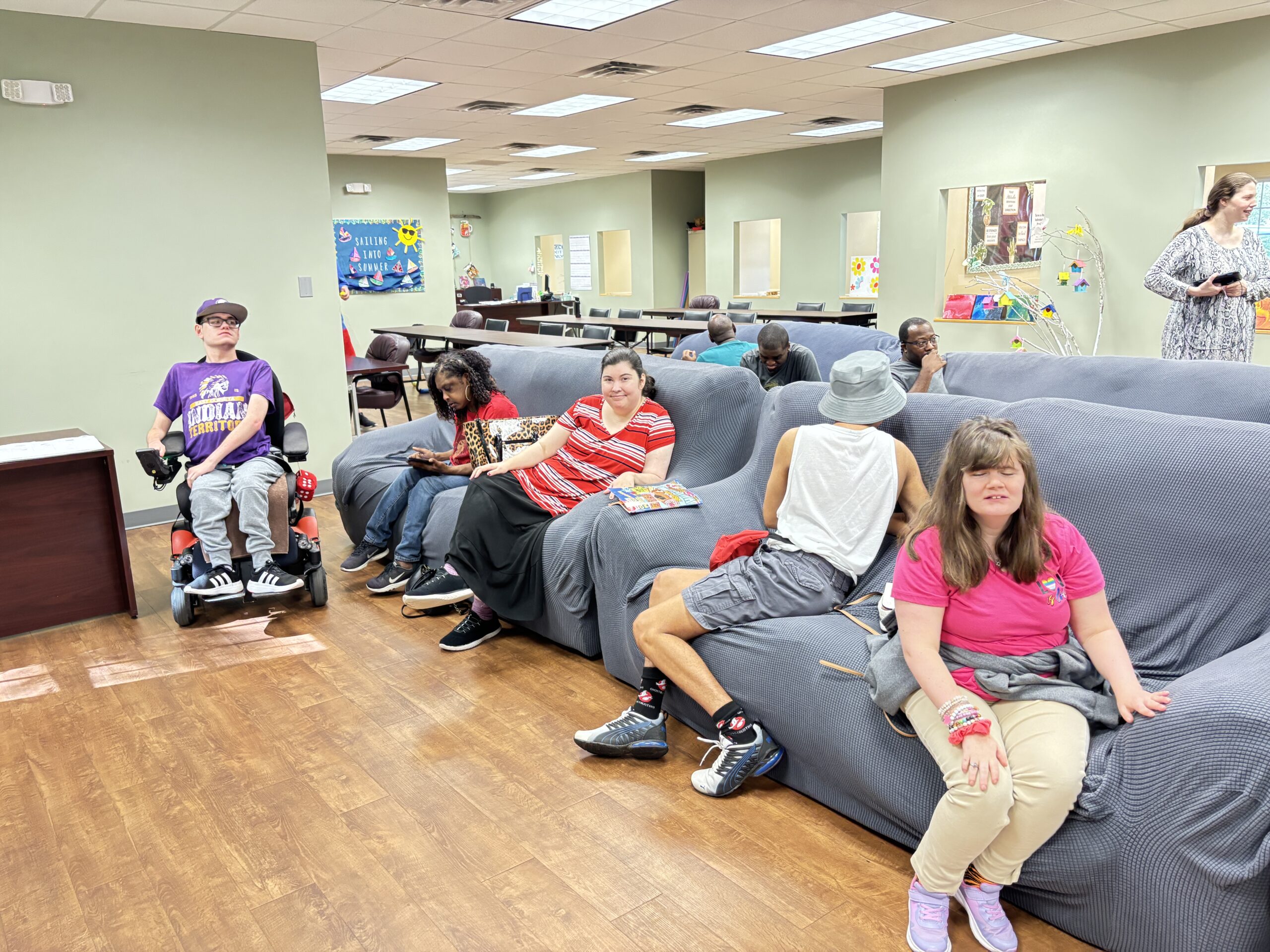
Community Access Group (CAG) services are provided to groups of individuals, with a staff to individual ratio of one to two or more. CAG services are designed to provide oversight, assist with daily living, socialization, communication, and mobility skills building and supports in a group. CAG services may include programming to reduce inappropriate and/or maladaptive behaviors. CAG services may be provided in a facility or a community as appropriate for the skill being taught or specific activity supported.

Community Living Support Services
Community Living Support (CLS) Services are individually designed to support the acquisition, retention, or improvement of life skills to facilitate residence in a waiver participant’s own or family home. Personal care/assistance may be a component part of CLS services, but the focus of personal assistance should be teaching the skills related to activities of daily living and instrumental activities of daily living. CLS services are offered to participants who live in their own or family homes. CLS Services may include any of the following:
Community Access Group (CAG) services are provided to groups of individuals, with a staff to individual ratio of one to two or more. CAG services are designed to provide oversight, assist with daily living, socialization, communication, and mobility skills building and supports in a group. CAG services may include programming to reduce inappropriate and/or maladaptive behaviors. CAG services may be provided in a facility or a community as appropriate for the skill being taught or specific activity supported.
- * Training and assistance with activities of daily living (ADLs), such as bathing, dressing, toileting, and transferring
- * Teaching and assistance in performance of instrumental activities of daily living (IADLs), such as personal hygiene, light housework, laundry, meal preparation, grocery and other shopping, using the telephone, and medication and money management.
- * Oversight and supervision of individuals unable to be left alone as assessed by DBHDD staff and under available funding.
CLS services include any transportation delivered to facilitate the individual’s participation in grocery or personal shopping, banking and other community activities that support the goals of the waiver participant and/or family. CLS services may include health-related activities such as basic first aid, arranging and/or transporting waiver participants to medical appointments, accompanying participants on medical appointments, tracking and documenting health- related daily activities such as intake and output, reminding participants to take medication, assisting with or supervising self administration of medication and other tasks that do not require the skill level of a licensed professional. Other task may be assigned by a licensed professional under the Proxy Caregiver Rule: Chapter 111-8-100 Rules and Regulations for Proxy Caregivers Used in Licensed Healthcare Facilities.
Direct personal care/assistance may be a component part of CLS services but should not be the only service provided to a participant. Rather, teaching skills that promote self-performance of the activities is the focus in all instances feasible. The frequency and duration of CLS services is designed to address specific needs determined by the Supports Intensity Scale, the Health Risk Screening Tool, and other participant-centered assessment information. The service need responsive to personal goals is specified in the Individual Service Plan.
Outpatient Treatment programs are available to all eligible individuals in our community that meet core customer criteria. We offer Outpatient Treatment programs in each of our counties.
Direct personal care/assistance may be a component part of CLS services but should not be the only service provided to a participant. Rather, teaching skills that promote self-performance of the activities is the focus in all instances feasible. The frequency and duration of CLS services is designed to address specific needs determined by the Supports Intensity Scale, the Health Risk Screening Tool, and other participant-centered assessment information. The service need responsive to personal goals is specified in the Individual Service Plan.
Outpatient Treatment programs are available to all eligible individuals in our community that meet core customer criteria. We offer Outpatient Treatment programs in each of our counties.
Community Residential Alternative Services (Day Program)
Community Residential Alternative (CRA) services are targeted for participants who require formal support 24 hours/day, 7 days/week. CRA services provide a range of interventions with a particular focus on training and support in one or more of the following areas: eating and drinking, toileting, personal grooming and health care, dressing, communication, interpersonal relationships, mobility, home management, and use of leisure time. CRA services are individually planned and tailored to meet the specific needs of the participant and to accommodate fluctuations in his or her needs for various supports in the areas of functional, healthcare or behavioral services. CRA services are delivered according to level of need which correspond to rate categories which reflect the fact that individuals with more significant needs require more intensive supports.
CRA services include assistance with and/or training in activities of daily living, such as bathing, dressing, grooming, other personal hygiene, feeding, toileting, transferring, and other similar tasks. CRA services may also include training and/or assistance in household care, such as meal preparation, clothes laundering, bed-making, housecleaning, simple home repair, yard care, and other similar tasks designed to increase waiver participants’ independence in self-care skills.
CRA services consist of medically related services that are not required to be provided by a licensed professional under State laws, rules, and regulations. Examples include basic first aid, arranging and transporting participants to medical appointments, assisting with therapeutic exercises, and assisting with or supervising self-administration of medication. Medically related services do not include direct nursing services, if required to treat, evaluate, or monitor specific conditions. CRA activities may also include implementing positive behavioral support plans individually designed to reduce inappropriate and/or maladaptive behaviors and to acquire alternative adaptive skills and behaviors.
CRA services include transportation to all other waiver services specified in the Individual Service Plan and as needed to facilitate the individual’s participation in personal shopping, recreation and other community activities.
CRA services may not be provided to persons living in their own or family homes.
CRA services include transportation to all other waiver services specified in the Individual Service Plan and as needed to facilitate the individual’s participation in personal shopping, recreation and other community activities.
CRA services may not be provided to persons living in their own or family homes.